Changing Life
Changing Life
We are now living in the 21st century and have the best of everything ranging from a standard living which gives us the privileges to choose a luxurious and high quality based lifestyle to being spoilt for choice when it comes to entertainment, sports, social media and its different types. Life is easier and much pleasant compared to life during the previous centuries. It is important to remember that no matter which era we live in, it always go through some or huge amount of change and it always is different to other eras of the world. that is because nothing last forever and nothing is continous, change is the pattern of life which nothing can ignore o go away from. hence, our live have been changing ever since and it is visible to all because we are a part of the change and it effects us in many ways. In this particular blog, the focus will be on the things in our everyday life that have been through change.
- Theater and Films
- Television
Theater and Films:
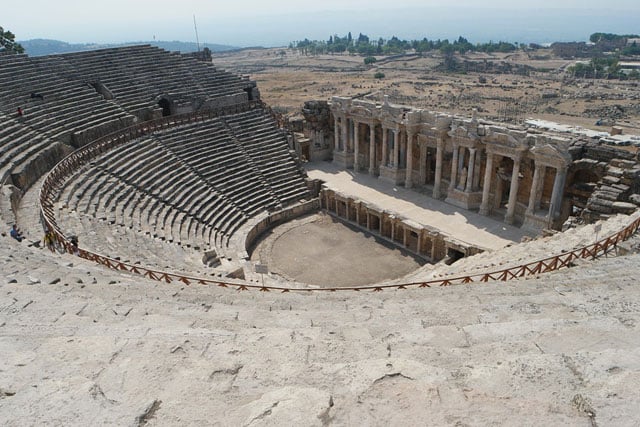 Since the ancient times human beings have been in need of entertainment and have made various efforts to entertain themselves in different way, be it through music, dance, drama or literature etc. Theater or the skill of showing or acting in front of a whole audience has also been an age old technique of entertainment. Theater can be traced back to ancient Greece in the 6th century B.C, wherein the Greeks were the first to present dramatic presentations of many kinds to show to the people and such was the case in ancient India as there used to be the showcasing of epics and mythological stories in drama form for the people to watch and educate themselves.
The art form of dramatic presentations went on for ages and reached new heights/ the European theater was also famous for its various dramatic representations taking stories form literature or real life events.
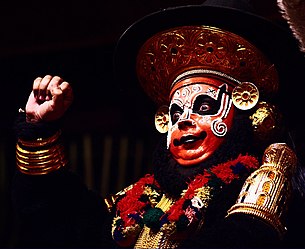 |
| Performer playing a part in the Koodiyattam form of Sanskrit theater |
The famous novels and stories of Shakespeare such as that of Romeo and Juliet, Macbeth, Anthony and Cleopatra etc were an all time favourite and always showcased among the masses of that era. Theater as an art form became famous with everyone, even the royals throughout the ages were in love with this particular art form.
Theater as an art form is still alive and popular among many around the world, it is now very diverse and has a lot of versatility. In today's day and age theater has more scope as there are added advantages like that of technology which provides the viewers a grand performance. the fact that theater also provides many jobs for actors, writers, directors, costume and makeup artists, event managers, electrical engineers and many more are benefiting as it is also now a money making form of art. Sound effects to suit the background and the emotions of the particular moment, backdrops of various decorative kinds, lighting to showcase the main character or to beautify the set are just some of the advantages technology has to offer to this kind of art for as there are many which make theater a thriving art form and still being viewed by many even as the world changes, this art for is here to stay and showcase as many dramas as possible and not just of the olden times but also new and freshly created stories by new age writers and storytellers.
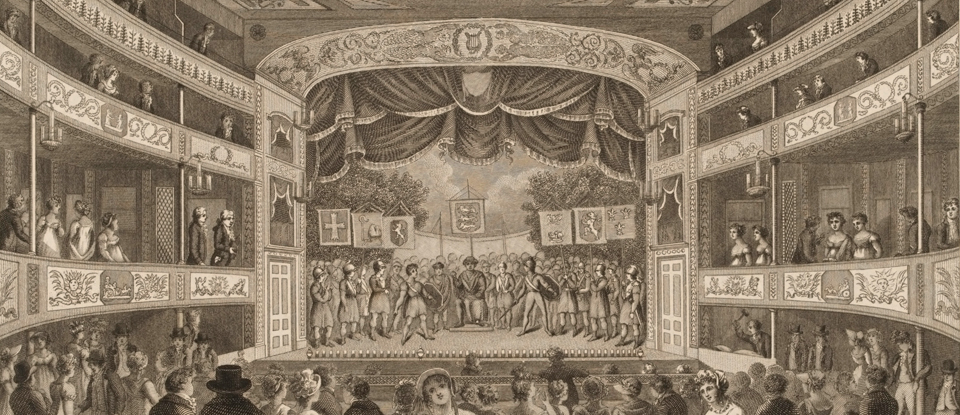 |
| European theater during the 19th century. |
| Theater in the modern times. |
Although the start of the history of film is not clearly defined, the commercial, public screening of ten of Lumière brothers' short films in Paris on 28 December 1895 can be regarded as the breakthrough of projected cinematographic motion pictures. There had been earlier cinematographic results and screenings but these lacked either the quality or the momentum that propelled the cinématographe Lumière into a worldwide success.
Soon film production companies were established all over the world. The first decade of motion picture saw film moving from a novelty to an established mass entertainment industry.
The earliest films were in black and white, under a minute long and without recorded sound.
During the 1890s films became several minutes long and started to consist of several shots. The first film studios were built in 1897. The first rotating camera for taking panning shots was built in 1898. Special effects were introduced and film continuity, involving action moving from one sequence into another, began to be used.
 |
| Brothers Auguste and Louis Lumiere. |
The film sector largely boosted its growth in the 20th century as there was better technological equipment to cater to the the needs for making a movie which gave movie goers sound effects, representations of different characters on the screen . There was at first the era of silent movies wherein the actor need not say a word and had no dailoges and had to act or express their emotions according to the script and the sound effects would help in mentioning the type of situation on screen. There are also many male and female artists that were famous as silent movie actors as they catered well to the golden age of silent movies.
 |
| Charlie Chaplin was a famous silent movie actor. |
It is known to everyone that the era of black and white movies prevailed in the 20th century . these films are now the classical and vintage films, India and its evolution of Bollywood also had its fair share of glorious black and white movies which are praised and known a lot about to this day. To facilitate the makers of the black and white movies there were award shows as well, the famous Oscars of Hollywood and the Filmfare of Bollywood were two of the well known from the other award shows which would broadcast on television and published on newspapers for the world to see. In around the 1950's the era of coloured movies came and was first showcased in Hollywood and then later spread to other countries.
| Actress Grace Kelly was famous during the colored movies era. |
There are many colored movies of Hollywood and after the invention of the colored movies genre there was no turning back. Soon the art and technological technique of making colored movies reached India in the late 1950's and many classics and movie legends were created and famous to this day.
Television:
Televisions can be found in billions of homes in today's day and age but a hundred years ago it was a rarity to even own a television. It was in the 1940's that the American's and that to only a few could own the television. Prior to electric televisions we had mechanical television which came to light in the early 1800's and it included mechanically scanning images and transmitting those images on screen, they were extremely rudimentary. The first electric television was invented in 1927 by a 21 year old inventor named Philo Tyalor Farnsworth. Starting in high school he began to think of a system that could capture moving images, transform those images into code, then moves those images along radio waves into different devices. Between 1926 and 1930 mechanical television inventors continued to tweak and test their creations but in 1934 all televisions had been converted into an electronic systems. Understandably, all televisions would showcase content in black and white colors only.
 |
| 'I Love Lucy' was a famous black and white T.V show in America. |
The black and white television shows in America were expanding and there were many viewers as well but post World War Two the American masses wanted a new life and wanted to forget anything old fashioned, thus, the idea of creating colored television came to light and was worked by a German. There were advertisements in black and white as well and America wanted everything new. The CBS was the first company to create a color television set and soon the color television became a national standard. Other famous companies such as RCA also started selling off color televisions in all of America. Very few people owned the colored version of television but after 1966 the trend of owning a colored television set was presented in every American household and television shows were broad casting all across America. Soon there was a rise of T.V Stations in America and it is the case till date. News, advertisements, movies and information was broad casting on these T.V Stations all over America.
 |
| Color television in America. |
 |
| Important medium of Indian television. |
In January 1950, The Indian Express reported that a television was put up for demonstration at an exhibition in the Teynampet locality of Madras (now Chennai) by B. Sivakumaran, a student of electrical engineering. A letter was scanned and its image displayed on a cathode ray tube screen. The report said that "[i]t may be this is not the whole of television but it is certainly most significant link in the system" and added that the demonstration of the sort could be the "first in India". Indian small screen television started in the 1980's and it was Government owned channel Doordarshan. It aired a few channels to choose from for the Indian masses, there few news channels which aired and the two most important and well known T.V shows Ramayana and Mahabharata were watched by many. In 1992, Prasar Bharti was an autonomous company which was established to serve as a public server to the millions of Indian television viewers. The colored television in India became a rage and the first ever serial was created which was known as Hum Log, later followed some more shows and then the trend of showing the national events and celebrations started as well. It also aired important information for both children and adults and was mainly a family centered medium. News channels, t.v shows, movies, talk shows, music videos and the important game events around the world followed up as well.
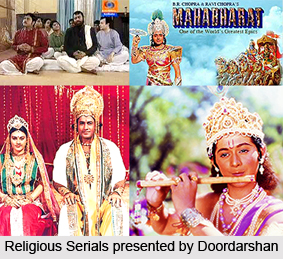 |
The central government launched a series of economic and social reforms in 1991 under Prime Minister Narasimha Rao. Under the new policies the government allowed private and foreign broadcasters to engage in limited operations in India. This process has been pursued consistently by all subsequent federal administrations. Foreign channels like CNN, STAR TV and private domestic channels such as Zee TV, ETV, Sun TV and Asianet started satellite broadcasts. Starting with 41 sets in 1962 and one channel, by 1995, television in India had covered more than 70 million homes giving a viewing population of more than 400 million individuals through more than 100 channels. There was no turning back for Indian television after this, the amount of channels of different kind were put up for the masses to choose from and such is still the case for Indian masses. T.V Soaps were a huge trend started in the early 2000's and it was a hit among the masses. Television in India has to date made many actors famous and is also medium to showcase new and modernized content which can viewed on any type of television.
 |
| Modern day t.v serials of India. |
This way we come to know about the two main factors of changing life and how and in what ways it has evolved and effected or created an impact in our lives. As mentioned before, nothing stays the same forever, thus, these two mediums of changing life have evolved and changed rapidly and continue to do so as we are the witnesses of such change and will also have the next generations to see the on going process of future changes. It is certain that we as humans have walked with the current times and will continue to do so and will have to do so to live peacefully and become aware of our surroundings and use it to our best advantages.
nice and very informative.
ReplyDeleteVery well written ..very informative 👍🏻👍🏻
ReplyDeleteVery good content something to learn from
ReplyDeleteNice information
ReplyDelete